Pattern Notes
When Depression Is a Refusal
If you're in crisis or thinking about ending your life, this article isn't the help you need right now — please contact a crisis line or a professional today. And never stop or change psychiatric medication on your own; that's only safe with your doctor involved.
There's a kind of depression the standard story explains badly.
The standard story says your brain chemistry went wrong — that the low mood is the mechanical result of a chemical imbalance. It's easy to see why the story catches on. From the inside, depression rarely comes with an explanation: nothing you can point to seems big enough to account for how you feel, or whatever started it happened so long ago you've half forgotten it.
Into that fog, "a chemical imbalance" finally gives the mystery a name — but in exchange, the cause moves somewhere you can't touch it. Medication may shift how you feel, sometimes into something easier to live with, but a shift is not a fix, and the fix story is the part the science never backed up.
For one common kind of depression there's a better deal: a cause you can find in your own life and actually do something about, because it lives in what things mean to you, not in your chemistry.
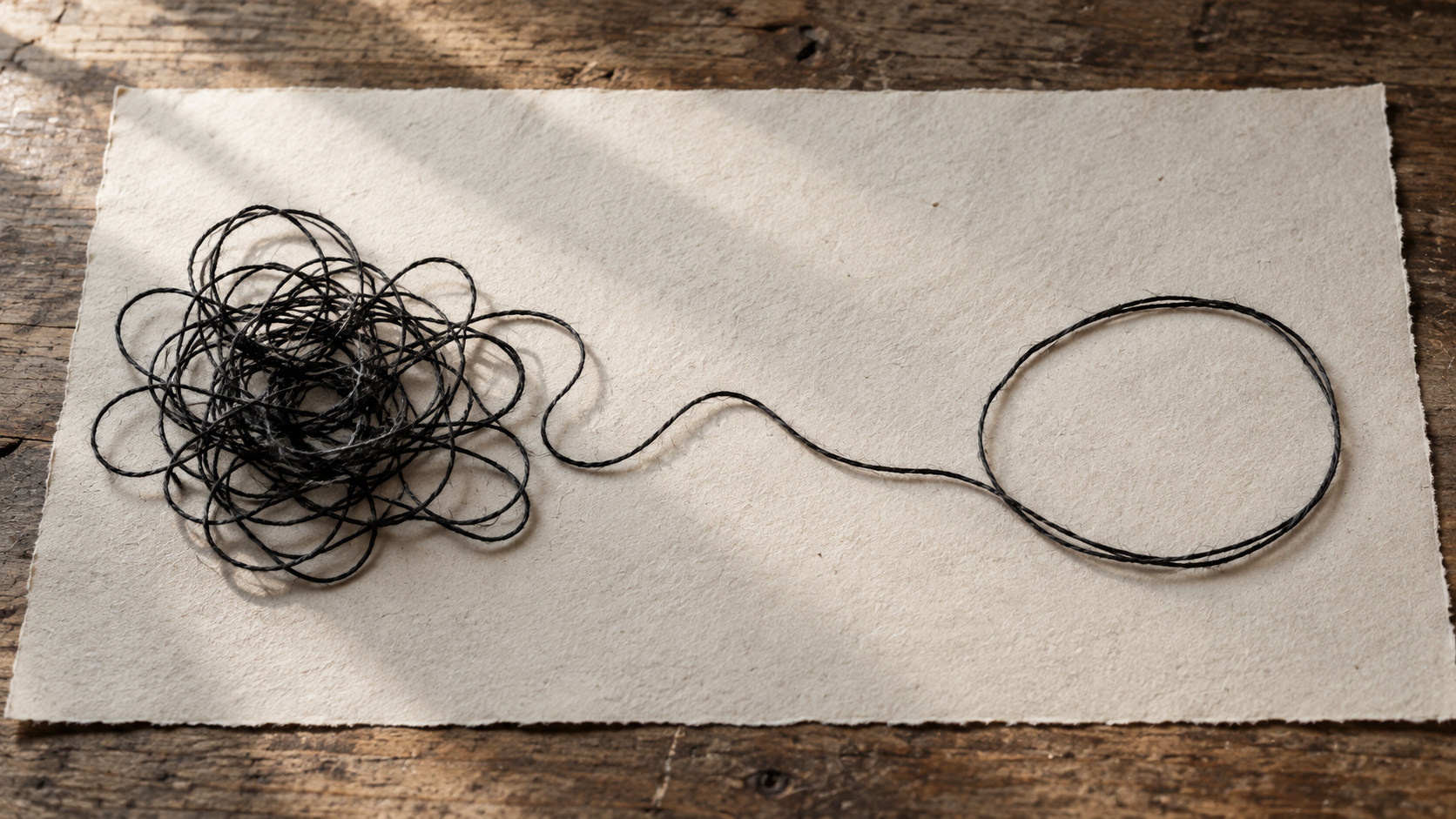
The shift is not from pain to no pain. It is from fighting what happened to being able to move from where you are.
Start with what your mind is doing at 3 a.m., because it isn't nothing. It's running the same argument again — about the person who left, or the life that was supposed to be here by now. Round and round, as if one more pass might change the outcome. That has a shape. It's a mind refusing to accept something it already knows.
When something happens that we can't accept, the mind does two things. It fights — replaying what happened, arguing with it, going over what should have happened instead. And it reaches for rescue — part of you keeps hoping someone or something will come and make it right. A small child separated from a parent does both at once: cries in protest, arms up to be held. Grief normally moves through both and comes out the other side. This kind of depression gets stuck in the middle.
Then comes the part that's almost impossible to see from inside. The fighting and the reaching are both aimed at the world — and the world doesn't answer. What's done can't be undone, and no rescue is coming. All that force has to land somewhere, and the only place left is you. The anger that belonged to what happened turns into being hard on yourself. The plea nobody answered turns into "maybe I'm just not worth answering."
You didn't choose any of this, and you're not doing it for attention — the force turns inward because it has nowhere else to go. Then it starts to feed itself. The replaying keeps the wound open, and pulling away from people removes the things that used to hold you up. Worse, once you've decided something is wrong with you, you start noticing whatever seems to prove it — until even kindness doesn't get through.
Sadness is an accepted loss.
This depression is a refused one.
Even the researchers draw the line here: sadness fades as you come to terms with what happened, while depression keeps chasing something that's gone. That's the whole idea in one line. And it means the way out isn't to stop feeling. It's to finally let the loss be a loss — feel it all the way through, and put a hand back on the wheel.
One warning. Seeing yourself in this won't fix it. For a mind that already overthinks, a sharp new theory about itself is just more to chew on at 3 a.m. The pattern runs deeper than understanding reaches — if understanding were enough, you'd be out already.
If what you have is the argument that never ends while everything slowly goes grey, the news is better than you've been told. Nothing about you is broken. Part of you has stayed loyal to something the world took away — and loyalty, unlike chemistry, is something you can change your mind about.
The next step
What are you still holding onto?
If this sounded like you, more reading won't get you out — one conversation might. Book a free consultation and we'll find what you're still holding onto, and what letting it go would take.
Start with a Free 15-Minute ConsultationPattern Shift is coaching, not therapy or crisis care.