The Two Phases of a Life
 jrp_admin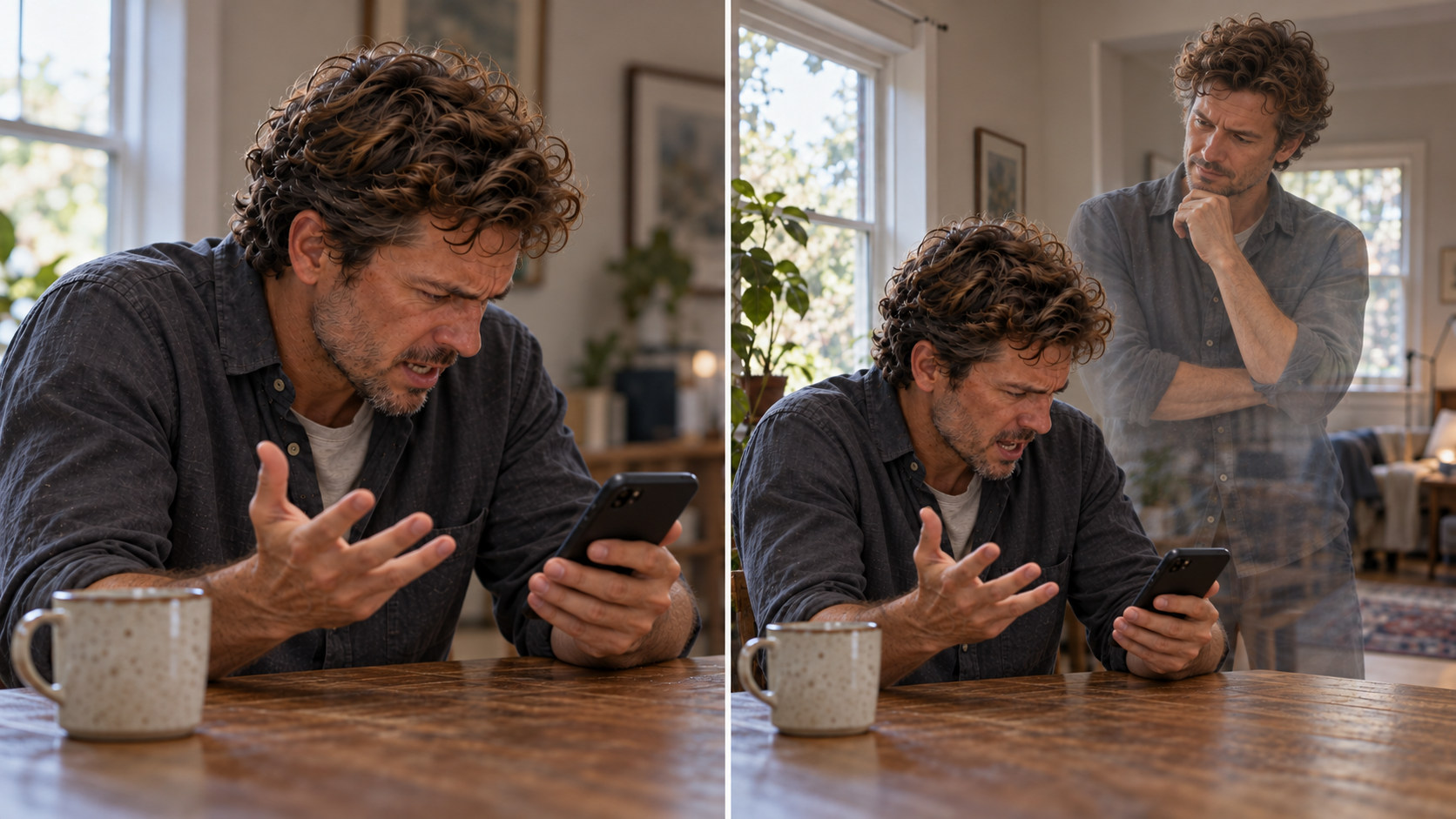
The Two Phases of a Life
There is a version of you that was built by circumstances you did not choose.
It was built early, and it was built well. The beliefs that formed about who you are, what you deserve, and what responses are available to you were not random — they were adaptive. They made sense at the time. The problem is that most people never move beyond them.
Phase one: the self that forms
In the first phase of self-formation we are essentially receivers. Identity gets assembled through accumulated experience — what we are told about ourselves, what responses earn approval or avoid pain, and what conclusions we draw from the moments that leave a mark.
Most of this happens before we have the capacity to evaluate it. A child does not choose whether to conclude that rest has to be earned, that expressing need makes you a burden, or that people like us do not do things like that. These meanings get embedded beneath conscious reasoning — attached to situations, wired into emotional responses, confirmed repeatedly until they stop feeling like interpretations and start feeling like facts.
The self built in phase one is optimised for a context that no longer exists. And yet it keeps running — the same responses, the same beliefs, the same identity — as if the original conditions were still in effect.
You recognise it in moments like these: the automatic reach for food or drink at the end of a hard day, not from hunger but from a meaning — I have earned this, this is how I cope. The defensiveness that arrives before you have decided to be defensive. The spending that happens just after a stressful week, driven less by want than by a feeling that relief is owed. The voice that says I am not the kind of person who does that — which does not feel like an old conclusion. It feels like self-knowledge.
Phase two: the self you would choose
The second phase — the one most people either never enter or enter only partially — is the deliberate construction of a self you would actually choose.
This requires something that does not come naturally: the ability to look at your own patterns from the outside. To see a response not as simply what happened but as something that was generated — by a meaning, a state, a belief that can be identified and changed.
When you can observe a pattern rather than simply inhabit it, something important becomes available. Not the effortful choice of someone overriding an impulse through willpower — something more fundamental. When the meaning attached to a situation changes, the state it produces changes. When the state changes, the behaviour that follows changes. Not because you forced it, but because the structure underneath it shifted.
The person who no longer reaches for the drink at the end of the day is not exercising more discipline than before. Something changed in what that moment means — and the automatic response lost its footing.
Why insight alone is not enough
Most people who do serious personal development work reach a point where they understand their patterns clearly. They can trace the origin, name the trigger, describe the response. And then the pattern runs anyway.
This is not a failure of understanding. The pattern does not live in the part of you that understands things. It lives at the level of meaning and state — faster than thinking, operating before the conscious mind has a chance to intervene.
Changing it requires working at that level directly — finding the specific structure that keeps the old response in place and introducing something more accurate at exactly that point.
When that happens it tends not to feel like an achievement. It feels more like a correction — like something that was slightly off for a long time has finally been set straight.
The question worth asking
Most people spend their entire lives in phase one — not because phase two is unavailable, but because the patterns built in phase one are very good at making themselves feel inevitable.
The most useful question is not why am I like this but is this actually me, or is this a version of me that was built for a different context?
The gap between those two questions is where change becomes possible.
Pattern Shift works with the structure beneath unwanted patterns — the meanings, states, and beliefs that keep old responses in place. If something here resonates with a pattern you recognise, the free 15-minute consultation is the place to start.